I bought a Levoit air purifier primarily to deal with dust and pet hair from my two golden retrievers in my apartment in Indianapolis. I have noticed that the air feels much cleaner but I am still struggling with that lingering general dog smell especially when the weather is humid or when the dogs come in from the rain. Does the air purifier actually remove the smell itself or is it only designed to capture the solid particles like hair and dander? I have a standard HEPA and carbon filter but I am not sure which component is supposed to handle the odors and if there is a better type of filter I should be using. I need advice on how to completely eliminate that persistent pet odor from my living space.
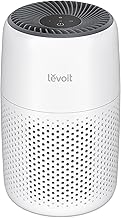
The odor removal function comes entirely from the activated carbon component of your filter not the HEPA filter. The HEPA filter physically traps solid particles like dander and pollen. The activated carbon chemically traps gaseous odor molecules like pet smells cooking fumes and cleaning product volatile organic compounds in a process called adsorption.
You need to make sure your carbon filter is fresh and has enough capacity for a heavy odor load like two Golden Retrievers. If your filter is older than two or three months the carbon may already be saturated with general household odors and simply cannot absorb any more pet smell molecules effectively. Try immediately swapping in a brand new filter and run the machine on high.
I found that a standard carbon filter was not enough to handle the smell from my elderly cat. I switched to a specialty Levoit filter that has extra activated carbon material specifically marketed for pet odors and the difference was night and day. If you have intense odors look for filters with a thicker layer or more granular carbon.
Yes purifiers absolutely remove smell but they work much slower than covering up a scent with a spray. They literally pull the odor molecules out of the air. You must combine this with surface cleaning because many pet odors stick to carpets and upholstery which the purifier cannot clean.
The strength of the fan is key for odor removal. You need to run the unit on a high setting to circulate the air and push the odor molecules through the carbon bed as quickly as possible. Low speed is fine for maintaining clean air but high speed is necessary for tackling existing stubborn smells.
If you are using essential oil diffusers or scented sprays in the same room you are actively working against your purifier. Those products release chemicals that saturate the carbon filter instantly killing its ability to absorb the pet smell you are trying to eliminate.
For a persistent dog smell you need to identify the odor source which is likely the dog bed or a favorite rug. If the source remains dirty the purifier will just keep pulling new odor molecules from that source forever. Clean or replace the source and the purifier can finish the job quickly.
I successfully removed a persistent paint smell from my home office after a renovation using my air purifier. I ran it on the highest setting for 72 hours straight with the door closed and the difference was incredible. It works wonders on chemical smells as long as the carbon is fresh.
You should check the size of the room versus the CADR rating of your unit. If the room is too large for the Core 400S the Air Changes Per Hour or ACH will be too low and the odors will linger because the air is not being processed fast enough through the carbon filter.
I had a terrible mold and mildew smell in my basement and the air purifier was the only thing that made the space habitable while I waited for professional remediation. It did not fix the mold source but it dramatically reduced the smell in the circulating air which was a lifesaver.
Make sure you change that filter right away $\text{ }$
}$
Be careful about ozone generating purifiers if you look at other options for intense odors. They can be very effective at neutralizing smells but they produce ozone which is a lung irritant and should not be used in occupied spaces. Stick to HEPA and carbon for safety.
Pet odor is not one simple molecule but a complex mixture of gases and volatile organic compounds released by urine dander and saliva. The carbon filter is great at tackling these complex mixtures but it needs time and constant air movement to trap all the different compounds.
If your apartment has central HVAC the pet odor might be trapped in the return air ductwork and being recirculated. Even with a powerful room purifier you will struggle to remove the smell completely until the ducts are professionally cleaned to remove the source contamination.
The only way to completely remove smell is to physically remove the odor source and then use the carbon filter to clean the remaining airborne molecules. Think of it as a clean-up crew that only works on the air after you have done the demolition work on the source.
I noticed that the smell comes back quickly if I ignore the pre-filter. A dirty pre-filter restricts airflow to the carbon bed reducing the speed at which the odors are adsorbed. Keep that outer layer spotless for maximum odor fighting power.
I need to clean my vents too that is a good idea.
The carbon adsorption process is temperature and humidity sensitive. If your apartment is very humid or very hot the carbon filter might perform slightly less efficiently than in a dry moderate climate which could explain why the pet smell lingers on wet days.